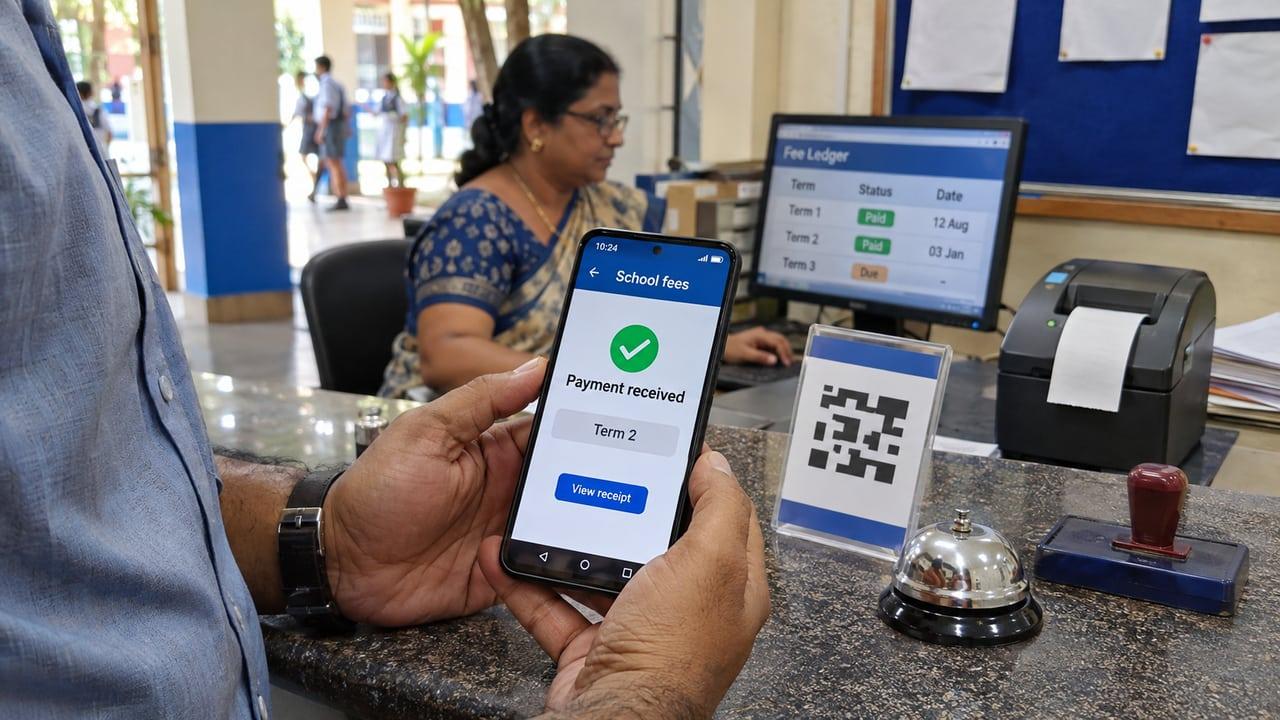
The key points
- Use a payment aggregator regulated by the RBI rather than collecting money into a personal account.
- Each payment must map to a student, a fee head and a receipt automatically.
- Confirm payment from the provider's server callback, because a browser redirect can fail or be faked.
- Reconcile settlements against the fee ledger every day to catch gaps early.
Which payment route should a school use?
Parents expect to pay by UPI, cards and net banking. The usual route is a payment aggregator or gateway that offers all three and settles the money to the school's bank account. The RBI regulates payment aggregators, requires them to onboard merchants after checks and to hold collected funds in an escrow account, and states that a merchant's site must not save customers' card data.
That last point shapes the design: the school's software should never see or store card numbers. It sends the parent to the provider's secure page or widget and receives a confirmation. Our guide to accepting UPI and card payments in India covers the options in more detail.
How should payments match fee records?
The common failure is a payment that arrives with no clear owner: a parent pays the right amount, but the office cannot tell which child or which term it covers. Prevent this by creating the payment request from inside the system, with the student, the fee heads and the amount already attached, and a unique reference that travels with the payment.
Real schools need more than a single amount. Plan for part-payments, concessions, sibling discounts, late fees, advance payments and refunds. The system should recompute dues after each payment and show the parent a clear statement, so questions at the counter drop instead of rise.
- A unique reference on every payment request
- Fee heads and concessions applied before the parent pays
- Part-payments and advances allowed where your policy allows them
- Automatic receipts by email or WhatsApp
- A clear statement of what remains due
How do you confirm payments and reconcile them?
A payment is confirmed when the provider tells your server, not when the parent's browser returns to your page. Browsers close, networks drop and redirects can be tampered with, so rely on a signed server-to-server notification and keep a record of every attempt, including failures. Parents who were charged but not marked paid should be fixed automatically when the confirmation arrives late.
Reconciliation then compares what the provider settled to the bank with what your ledger says was collected. Run it daily, list mismatches for the accounts office and keep a trail of corrections. Reminders for overdue fees work best when they are polite, timely and sent through a channel parents read, as described in using WhatsApp to talk to parents. See also what school software should include for how fees fit with the other modules.
Online fee collection checklist
- A regulated payment provider supporting UPI, cards and net banking
- Payment requests created inside the system with student and fee head attached
- Confirmation from the provider's server callback, not the browser redirect
- Automatic receipts and a clear dues statement for parents
- Daily reconciliation of settlements against the fee ledger
- No card details stored on the school's systems or spreadsheets
Sources
Rules and guidance this answer relies on. Policies change, so check the current version before acting on it.