The key points
- A hold is tentative and expires on a date the family has been told. A confirmed booking needs a contract and a deposit.
- Do not use a card authorisation to hold a date: Razorpay releases uncaptured authorisations within days, not weeks.
- A payment link with a reference id, an expiry and partial payments labels each deposit and instalment.
- The calendar needs a tentative and a confirmed state, and your system must check for clashes before it writes.
- Cancellation, forfeiture and refund terms belong in the contract, and a lawyer should review them once.
What is the difference between holding a date and confirming a booking?
A hold reserves a date for a short stated time while the family decides. A confirmed booking exists only when the signed contract and the first deposit are in. Until then the date can be released. Say this in plain words in the message that offers the hold, so nobody is surprised.
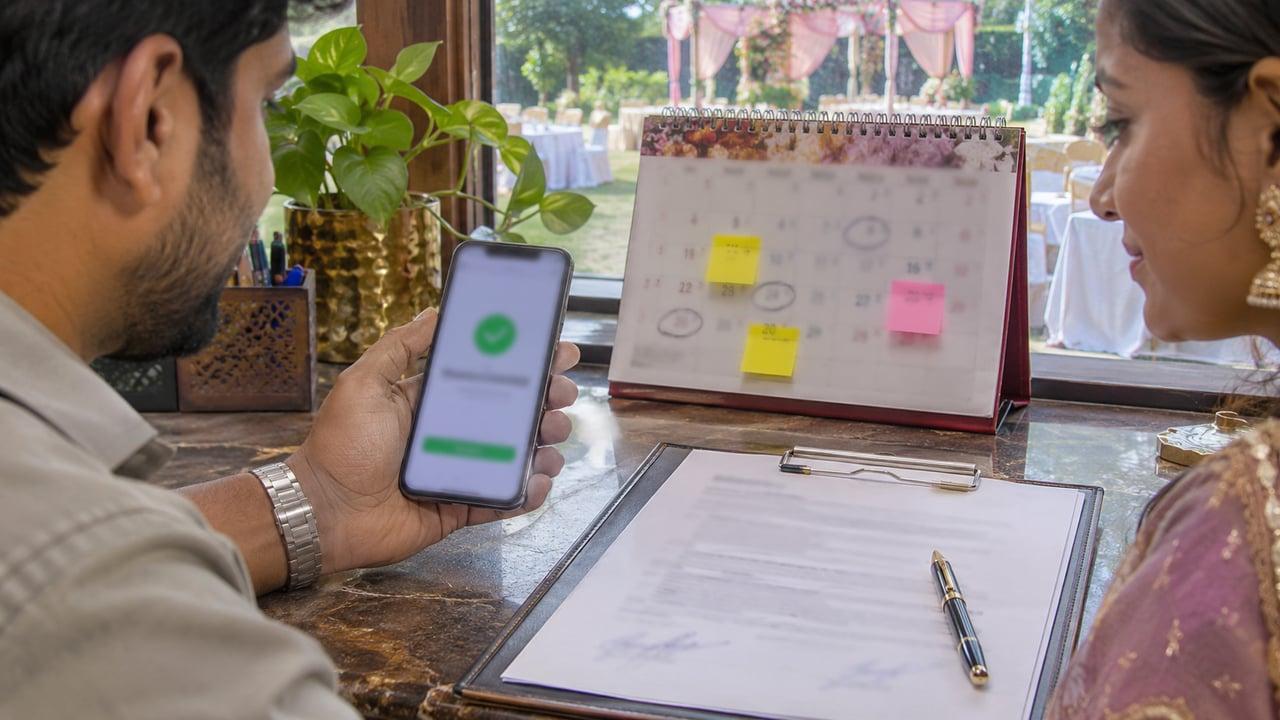
Picture a family comparing two venues for a Saturday evening. They ask for a week. The front desk places a hold with an expiry date and tells them the date and time it lapses. If they return before it, a payment link moves the date to confirmed. If not, the system releases the date and the next family in the queue is told it is free.
Holds can queue. A second family asking for the same slot is placed second and told so. If the first lapses, the second is offered the date. A first-come queue is fairer to families and easier to defend than a decision made by whoever is on the phone.
How long should a hold last?
Long enough for the family to visit and decide, and short enough that the date is not blocked for a wedding you could have sold. The length is your decision, and many venues vary it with how close the date is: a longer hold for a date far away, a shorter one for next month. Write the rule down once and apply it to everyone.
Put the expiry in the message and in the calendar entry. Send one reminder before it lapses, offering to extend if the family is close to confirming. Extensions should be a conscious choice by the manager, not a default, so the calendar does not fill with maybes.
Why should a card authorisation not be used to hold a date?
Because Razorpay releases uncaptured authorisations within days, and a date hold runs for weeks. In Razorpay's capture settings documentation, an authorised payment must be captured within the configured window, a short period measured in minutes to days, or it is refunded to the customer automatically. The exact window is set in the dashboard and can change, so read the current page before you rely on it.
Authorisation followed by capture suits a short gap, such as confirming stock or checking details before taking the money. It does not suit a hold that must survive a family's decision time. If you need to hold a date, hold it in your calendar and ask for a deposit when the family says yes. The difference between the two payment states is explained in why a Razorpay payment is authorised but not captured.
How should the deposit be collected?
Send a payment link for the deposit amount and let the family pay by UPI, card or net banking on their phone. Razorpay's Create a Standard Payment Link documents the controls that matter here: accept_partial lets a customer pay in parts, first_min_partial_amount sets the minimum first payment, expire_by sets when the link stops working, reference_id tags the link with your own unique reference and reminder_enable sends reminders.
Use the booking number plus a suffix as the reference id, for example BK-1042-D1 for the deposit and BK-1042-I2 for the second instalment, so every payment arrives already attached to the right booking. Set the link's expiry to match the hold's expiry, and the payment closes with the hold. Instalments can use the same pattern: one link per instalment, each with its own due date and its own suffix.
Do not mark a booking confirmed because the family says they paid. Mark it confirmed when the gateway reports the payment, using the webhook setup in setting up Razorpay webhooks correctly. Cash and bank transfers are entered manually with a receipt number. For the wider set of payment choices see accepting UPI and card payments on your website.
How should the calendar show holds and confirmed dates?
The calendar needs two states that look different at a glance. Google Calendar's Events resource defines status values of confirmed, tentative and cancelled, with confirmed as the default and tentative meaning tentatively confirmed. It also defines a transparency value: an opaque event blocks time and a transparent one does not. A hold should block the date, so it stays opaque.
The Calendar API does not check for clashes for you. The events insert page documents the fields you can set but describes no conflict check, so your system should check availability against its own booking data before it writes a hold. That check is what prevents two families holding the same slot.
If your halls also list on marketplaces, share blocked dates by iCal as described in stopping double bookings across booking sites. The whole flow, from enquiry to event sheet, is described in what banquet hall booking software should do.
What should the cancellation and refund terms say?
They should say, before the family pays, what happens to the deposit if they cancel or change the date, and what happens if the venue has to cancel. Write them in the contract in plain language and repeat the key points in the payment message. Which part of a deposit is refundable and when is a legal question, so have your lawyer review the wording once and reuse it.
Razorpay's refund documentation says you can refund the entire amount or issue multiple partial refunds as long as the total does not exceed the captured amount, and that refunds go back to the original payment method, with normal refunds taking working days. Your system should record each refund against the booking, with the reason.
How tax applies to an advance and to a forfeited deposit is a question for your chartered accountant. Software should record the facts, and your accountant decides the treatment.
Booking states and what moves a date between them
| State | Calendar status | What moves it forward | When it ends |
|---|---|---|---|
| Enquiry | None; date shown as available | Family asks to hold the date | Family goes quiet; nothing blocked |
| Hold | Tentative, blocks the slot | Contract signed and first deposit received | Expiry date passes, or the manager releases it |
| Confirmed | Confirmed, blocks the slot | Final payment and event day | Event is completed or the contract is cancelled |
| Released | Cancelled or removed | Next family in the queue is offered the date | Date is open again |
How to hold a date and take a deposit
Check the slot
Confirm the hall and slot are free with a calendar check, including joined halls and setup time.
Place the hold
Create a tentative entry that blocks the slot, with an expiry date, and tell the family in writing when it lapses.
Confirm the quote and send the contract
Share the quote and the contract terms, including cancellation and refund terms, before asking for money.
Send the deposit link
Create a payment link with the booking number as reference, an expiry that matches the hold and instalments if agreed.
Confirm on the payment event
When the gateway reports the payment and the contract is signed, change the date to confirmed and notify the team and vendors.
Release or extend
If the hold lapses, release the date and offer it to the next family. Extend only by a manager's decision.
Hold and deposit checklist
- Every hold has an expiry date that the family has been told in writing.
- A date is confirmed only after both the contract and the first deposit are in.
- No card authorisation is used to hold a date.
- Each deposit link uses the booking number as its reference and expires with the hold.
- Confirmation is triggered by the gateway's payment event, not by a screenshot.
- The calendar shows holds and confirmed dates differently and checks for clashes before writing.
- Cancellation and refund terms are in the contract and have been reviewed by a lawyer.
- Refunds are recorded against the booking with a reason.
Sources
Rules and guidance this answer relies on. Policies change, so check the current version before acting on it.