The key points
- One pipeline with a named owner for each enquiry stops leads going quiet between calls.
- Check the date before replying, so the first message already answers the planner's main question.
- The site visit is the key step. Book it in the first reply and follow up the same day.
- WhatsApp messages sent after a 24-hour window need an approved template and the customer's opt-in.
- Under India's DPDP Act, consent is specific and withdrawable, so say what the number is used for and honour a stop request.
What does an event enquiry pipeline look like?
A pipeline is a short list of stages that every enquiry passes through, with one person responsible at each stage. For a banquet hall the stages are: new, qualified, visit booked, visited, quote sent, date held, booked and lost. Everyone looks at the same board, and nobody asks "who has the Saturday wedding?" because the record says.
Keep the stages few. Each one should match something that actually happens. A stage nobody updates is a stage that lies. Record the source of every enquiry (website form, WhatsApp, phone, marketplace, walk-in) and the reason for every lost enquiry (date taken, budget, location, chose another venue). Those two fields teach more than any report.
What should the first reply contain?
The first reply should say whether the date is free, state the hall and capacity that fit, and offer two times for a site visit. Planners often approach several venues at once, and the venue that gives a clear, complete answer first usually gets the visit. A reply that says "please call us" hands the lead to a competitor.
Collect four facts at the start: date, event type, guest count and the contact's name and number. Ask for the budget and menu preference in the conversation, not on the form. If your calendar shows the date as held for someone else, say so and offer the next best dates, as explained in what banquet booking software should do.
Enquiries arrive at all hours, often in the evening when families have time. Replying at 11 at night is not necessary, but a prompt acknowledgement that sets a time for the real reply is, as covered in handling after-hours calls and enquiries with SMS or WhatsApp.
How should the site visit and follow-up work?
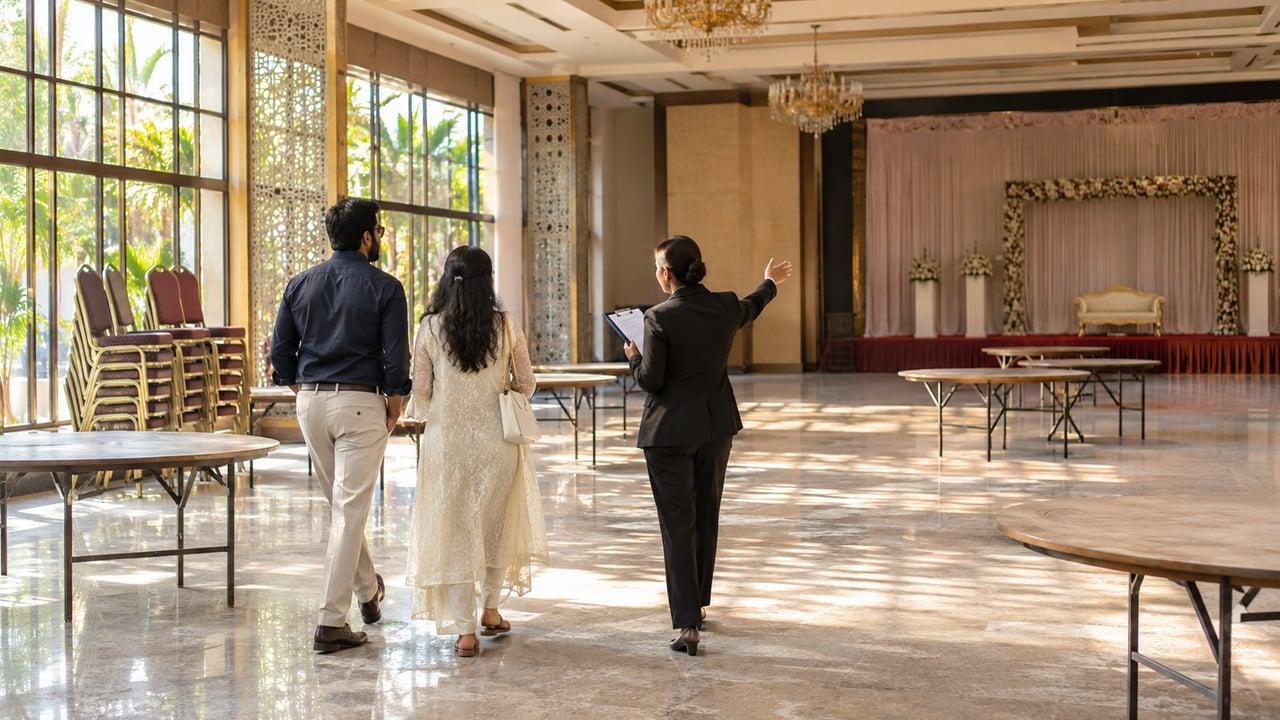
Book the visit as an appointment with a reminder the day before, a named host and a checklist of what the family wants to see. After the visit, the host writes two lines in the record: what the family liked and what worried them. This stops the common gap where the person who gave the tour is not the person who sends the quote.
Send the quote the same day, with the notes reflected in it. Follow up on a schedule you set in advance: for example the next morning, three days later and a week later, each message adding something useful, such as the availability of an alternative date or the menu sheet. Stop when the family says no, and record why.
When a family wants time to decide, hold the date for a stated period, as set out in how a venue should hold a date and take a deposit. The hold should have an expiry date so the calendar does not fill with maybes.
How can WhatsApp follow-up stay within the rules?
WhatsApp follow-up is allowed when the person has opted in and, outside the reply window, when you use an approved template. Meta's opt-in policy says businesses must clearly state that a person is opting in to receive messages, name the business, and comply with applicable law. A tick box on the enquiry form with that wording satisfies the first two.
Meta's messaging documentation explains that a 24-hour customer service window opens when the person messages you, and once it closes you can only send pre-approved template messages. That is why a follow-up three days after a visit is a template, and why a family replying restarts the window.
The practical setup is a shared WhatsApp Business account on the API with the team inbox, covered in the WhatsApp Business app versus the API and in how small teams share one WhatsApp Business number. Bulk promotions to old lists are a separate matter, set out in sending bulk messages without getting blocked.
What does India's DPDP Act mean for enquiry data?
A family's phone number, name and event details are personal data, and the venue decides why it is collected, which makes the venue the data fiduciary. Section 6(1) of the Digital Personal Data Protection Act, 2023 says consent must be free, specific, informed, unconditional and unambiguous with a clear affirmative action, limited to the personal data necessary for the specified purpose.
Section 6(4) gives the person the right to withdraw consent at any time, with the ease of doing so comparable to the ease with which it was given. In practice: tell people on the form what the number is used for, do not pre-tick the box, and make "stop" work in one message. The detail for websites is in what the DPDP Act means for a business website, and for stored chats in the DPDP Act and chatbots that store chats. Confirm timelines and retention rules with your lawyer.
Commercial SMS and calls follow separate telecom rules in India, apart from WhatsApp. The after-hours enquiry answer covers DLT registration and consent for SMS.
Which parts can be automated, and which stay human?
Automate the routine and keep people for the persuasion. Automation can log every enquiry, check the date, send the first reply, book the visit, send reminders and chase the quote. A person should take the site visit, handle price discussion and answer anything unusual.
A chatbot can collect the date, headcount and event type at any hour and hand the manager one clean card instead of twenty messages, as in what a hotel or homestay chatbot should handle. LeadFlow captures, routes and follows up each enquiry, and workflow automation connects the pipeline to your calendar, quotes and payments. Automatically capturing and following up leads covers the general pattern. Measure which sources produce booked events using tracking enquiries in GA4; Google's key events help page explains how to mark an event such as a form submission as a key event.
Pipeline stages and the action at each one
| Stage | What happens | Owner and next action |
|---|---|---|
| New | Enquiry logged with source, date, event type, guests, contact | Sales lead replies with date availability and two visit times |
| Qualified | Hall and date fit; contact responds | Book the visit with a named host and send the confirmation |
| Visit booked | Visit date and host confirmed | Host sends a reminder the day before |
| Visited | Family sees the hall; host writes two lines of notes | Send the quote the same day |
| Quote sent | Quote and menu sheet delivered | Follow up on the planned schedule |
| Date held | Slot held with a stated expiry | Collect deposit and contract before expiry |
| Booked or lost | Contract and deposit received, or reason recorded | Hand over to operations, or log the lost reason |
Enquiry management checklist
- Every enquiry has a record with source, date, event type, guests and an owner.
- The first reply states date availability and offers two site visit times.
- Site visits have a host, a reminder and two lines of notes afterwards.
- The quote goes out the same day, and follow-ups follow a schedule set in advance.
- Holds carry an expiry date shown to the family.
- The form's consent line names the venue and purpose; the box is not pre-ticked.
- WhatsApp follow-ups outside the reply window use approved templates.
- Lost enquiries record the reason.
Sources
Rules and guidance this answer relies on. Policies change, so check the current version before acting on it.