The key points
- A calling agent fits a missed call and a person who will not open a chat.
- A WhatsApp chatbot fits an order, a file, and a payment link the customer must keep.
- A call to your ordinary phone number does not open WhatsApp's customer service window.
- An agent that dials out makes an A2P call under TRAI's rules, declared to your operator before launch.
When the phone is the channel the customer already uses
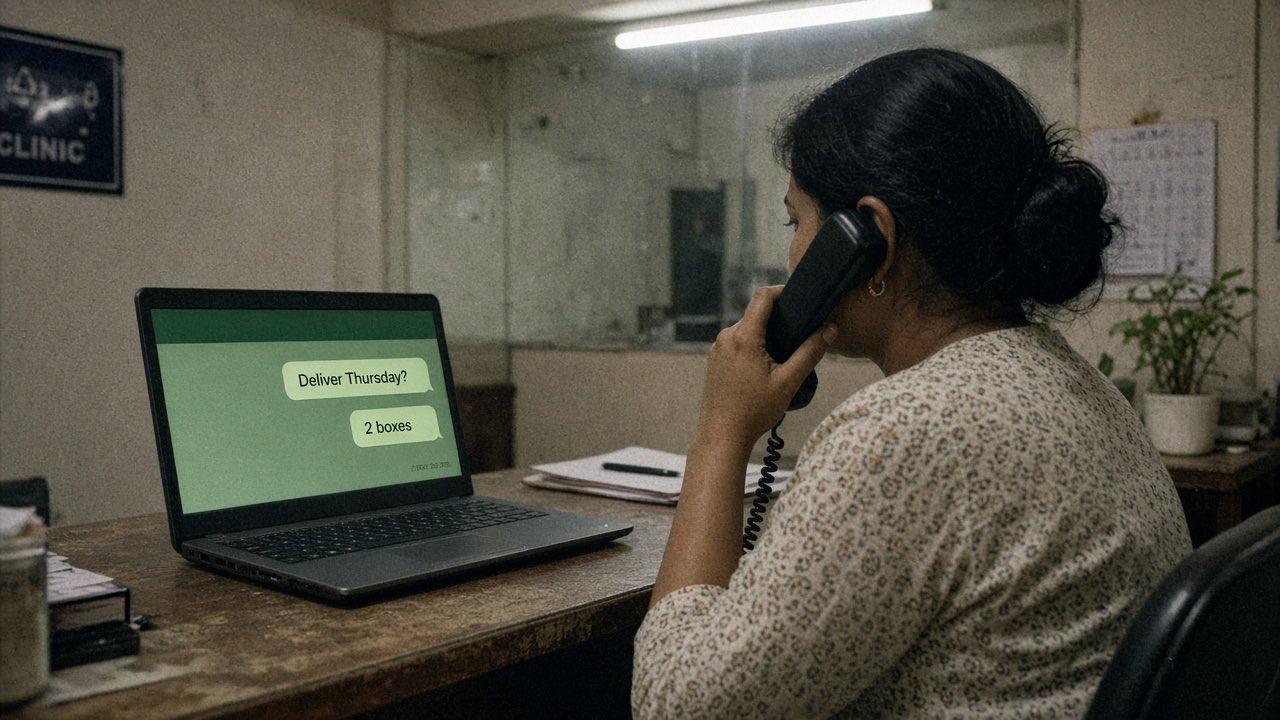
A calling agent earns its place when the enquiry arrives as a ring. Clinics after hours, a transporter's office, a property desk, a school during admission: the customer called because they will not type the question. Sending them to WhatsApp asks them to change channel, and a share of them will not. What an AI receptionist is covers the whole front-desk job. The calling agent is the part of it that speaks the answer and books the slot, then writes the result somewhere a person can see it in the morning.
It also fits a callback the customer asked for, where the decision is yes or no on the call: confirm the delivery window, confirm the appointment, confirm that the part is in stock. The customer is already expecting a voice. A chat message is easier to ignore. An AI receptionist beside a person at the desk is the judgement question: the agent handles the repeated call, and a person takes the one that is upset, unusual, or outside the rules you wrote.
When the chat is the better record
WhatsApp wins when the customer has to leave with something they can scroll back to. An item list, a price that was agreed, a photo of a part, a payment link, a PDF. A voice call can say those things. It cannot leave them on the customer's phone unless you also send a message, and that message has its own rules.
WhatsApp's customer service window opens when the customer messages you or calls you on WhatsApp, and free-form replies sit inside that window. Outside it, you send an approved template, and only to people who have opted in. Meta publishes the current charging rules on its WhatsApp pricing page. A voice call to the office number does not open that window. After-hours calls handled by SMS or WhatsApp is the pattern: the first touch is a registered SMS with a click-to-chat link, and the chat starts when the customer taps it.
If your team already lives in a shared WhatsApp inbox, adding a calling agent does not replace that inbox. It covers the calls the inbox never sees. An AI voice agent covers the spoken side, the chatbot the written side, and both write to the same callback log. Many businesses need the chatbot first, because that is where the orders already are.
Which TRAI rules apply to a calling agent?
An agent that answers a call the customer placed is replying. An agent that dials out, for a callback or a delivery confirmation, makes what TRAI's Third Amendment to the TCCCPR, notified on 18 September 2026, calls an Application-to-Person (A2P) call: one started by software without a person dialling, including calls in an artificial voice. Every sender declares A2P calling to its originating access provider in advance, with the number ranges it will use, and an undeclared A2P call is treated as unsolicited commercial communication.
Advice to senders lists the registration steps (principal entity, header, content template, consent where the message needs it) and defines promotional and service voice calls. The call type decides the number series and whether DND preferences apply. Whether an AI voice agent can make outbound sales calls in India sets that out call type by call type. Confirm the declaration and the series for your calls with your access provider before the agent goes live.
Two practical limits sit beside the regulation. The agent says it is an assistant, and it offers a person. It does not invent a price, a stock figure, or a legal commitment. Those come from a list you approved. A call the agent cannot finish becomes a callback with a name and a time, written down, not a guess spoken to fill the silence.
Which channel fits the enquiry
| Situation | Calling agent | WhatsApp chatbot |
|---|---|---|
| The customer rang and hung up | Speaks the answer and books the callback | Sees nothing until they message you |
| They need a list, a file, or a payment link | Can say it, then still needs a message | Leaves it in the chat they can reopen |
| They will not type | Stays on the phone | Asks them to switch channel |
| You need to message first, outside a chat | Does not open the WhatsApp window | Needs an opted-in template |
| The question is angry or outside the script | Hands to a person | Hands to a person |
Before you pick the channel
- Count a week of missed calls against a week of WhatsApp orders
- Write the questions the agent may answer, and the ones a person takes
- Declare outbound A2P calling, with its number ranges, to your access provider before launch
- Keep WhatsApp templates for the written follow-up, separate from the call
- Log every call to a named callback a person can see in the morning
Sources
Rules and guidance this answer relies on. Policies change, so check the current version before acting on it.