Why this question is hard to answer honestly
Ask about the cost to build a website in India and you will get quotes that differ by a factor of ten for what sounds like the same brief. That is not because some agencies are dishonest. It is because "a website" describes anything from five styled pages to a booking platform with payments, and nobody has written down which one you want.
This is a guide to what actually moves the number, so you can read a quote properly and ask the questions that matter. We have deliberately not published figures here. A number without a scope misleads more than it helps, which is also why our own pricing page explains the engagement model and cost drivers rather than advertising a headline rate.
The seven things that move the price
1. Templates count, not pages
Ten pages using the same layout cost barely more than five. Five pages each needing its own layout cost considerably more. When a quote is priced per page, ask how many distinct designs are involved — that is the real unit of work.
2. Whether your content exists
This is the most underestimated factor by a wide margin. If you have copy, photographs and a clear sense of what each page should say, the build is straightforward. If someone has to interview you, write the copy and source imagery, that is a separate professional skill and a real cost.
It is also the most common cause of delay. Projects rarely slip because of development; they slip waiting for content.
3. Integrations
Every connection to something else is work, and each has its own edge cases. A contact form is trivial. Booking against real availability rules, payments, a CRM sync, or a WhatsApp enquiry route are each meaningfully more.
Be specific here. "Booking" can mean an enquiry form or a system that prevents double-booking against a live calendar, and those are not comparable.
4. Whether it is a website or an application
The line is: does it just present information and capture enquiries, or does it *do* something? Logins, dashboards, records that change, workflows — those make it software, and software is a different scale of project.
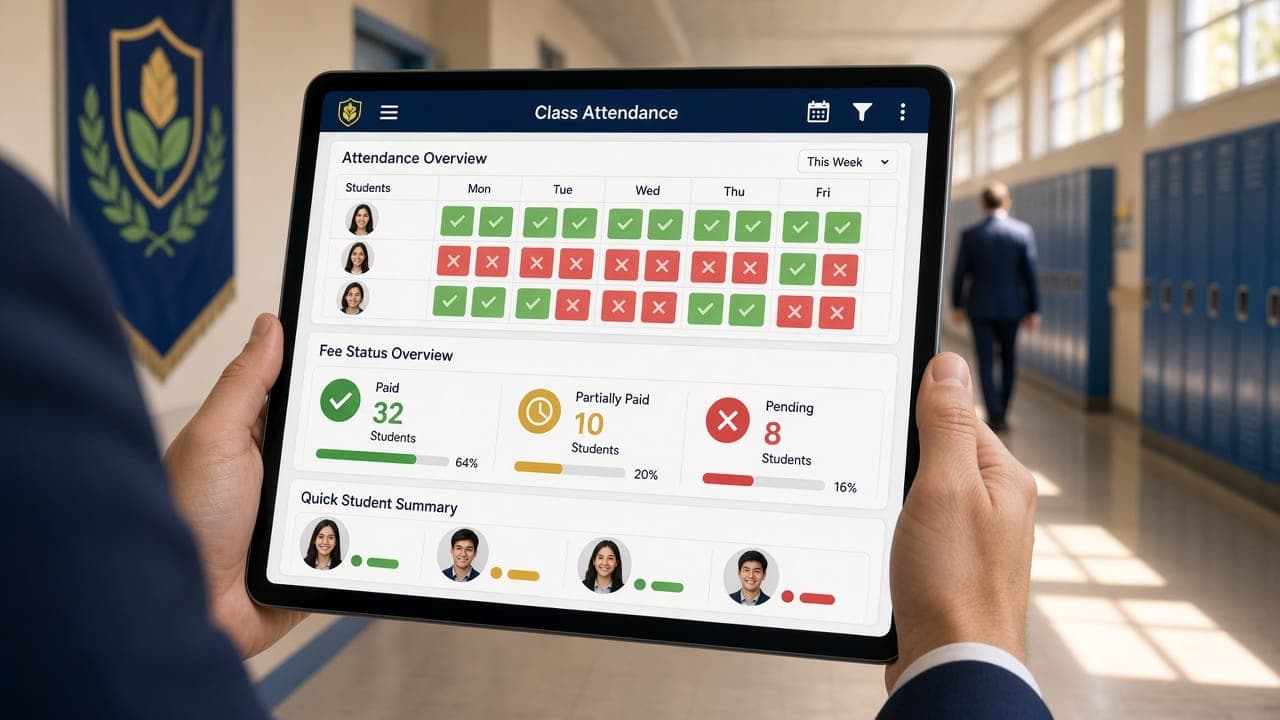
Plenty of quotes go wrong because the client described a website and wanted an application. The school management portal we built is the second thing; the school's public site is the first. They are separate projects with separate budgets.
5. Whether performance is a requirement or an afterthought
Building a fast site is a discipline applied throughout: image handling, script loading, how fonts are served, what runs before first paint. Retrofitting it afterwards is slower and more expensive than doing it from the start.
Ask whether Core Web Vitals are part of the brief. If the answer is vague, assume performance work is not included, and remember that speed is a confirmed Google ranking factor.
6. Who owns what at the end
A quote that is cheap because you never receive the code, cannot access the hosting, and do not control the domain is not cheap. It is a rental with a purchase price attached.
Ask directly: at the end of this project, will I have the repository, deployment access, and the domain in my own account? A reluctant answer is the finding.
7. Revisions and review rounds
Unlimited revisions sounds generous and is usually priced in somewhere or quietly capped. A defined number of review rounds is more honest and usually cheaper. What you want to avoid is the arrangement where scope expands indefinitely and the relationship sours over what was included.
What ongoing costs to expect
Separate from the build:
- Domain renewal, annually
- Hosting, monthly or annually depending on the platform
- Email hosting, which is not the same as your domain and is frequently forgotten
- Maintenance, if you want security patching, dependency updates, backups and uptime monitoring handled rather than discovering a problem the hard way
- Third-party services for anything the site depends on: payment gateway fees, transactional email, SMS
None of these are large individually. A quote that mentions none of them is incomplete, and the gap always turns up later.
The three kinds of supplier, and what each is good at
Quotes cluster into three bands because there are three quite different kinds of supplier, and confusing them is where most disappointment comes from.
Do-it-yourself platforms. A website builder with a template, done by you or a relative over a weekend. Genuinely the right answer for a business that needs to exist online and nothing more. The real cost is your time and the ceiling you hit later: these sites are hard to make fast, awkward to extend, and the platform owns the environment your site lives in.
Freelancers and small studios. The broadest band and the most variable. An excellent freelancer delivers better value than an average agency, and a poor one leaves you with a site nobody can maintain because it was assembled from plugins nobody documented. The determining question is not price but whether you can reach them in six months and whether you hold your own accounts.
Agencies and product studios. More expensive, and what you are buying is process: scoping before quoting, someone accountable when a person is unavailable, and work that another developer can pick up. Worth it when the site has to perform commercially or connect to something operational. Not worth it for a brochure site, and a good agency will tell you that.
The mistake is comparing a freelancer quote against an agency quote as if they were bids for the same thing. They are priced differently because they carry different risk, and neither is the correct answer in general.
Warning signs in a quote
Some patterns reliably predict trouble:
A price with no written scope. The most common and the most expensive. Whatever was assumed will surface as a change request.
Monthly payments for the website itself, as opposed to for maintenance. Read carefully whether you are buying or renting, and what happens to the site if you stop paying.
Hosting and domain registered in the supplier's account. This is how businesses lose control of their own web presence, and it is usually discovered at the worst moment — when the relationship has already broken down.
"Unlimited" anything. Unlimited revisions, unlimited pages, unlimited support. It is either priced in, quietly capped, or a source of future conflict.
SEO bundled as a line item with no detail. SEO is ongoing work with a horizon of months. A one-off "SEO included" line usually means metadata was filled in, which is worth having but is not what most people assume they are buying.
No mention of ongoing costs at all. Domain, hosting, email and maintenance exist whether or not the quote names them.
Questions that expose a quote you should not accept
Ask all of these. The answers are more informative than the price:
- What exactly is in scope, written down? If this cannot be produced, the quote is a guess.
- What happens when scope changes? "We re-quote and you approve before we start" is the answer you want.
- Do I own the code, hosting and domain?
- How many review rounds, and what happens after them?
- Is performance work included, and how will it be measured?
- Who writes the content?
- What does support cover after launch, and for how long?
- What would make this project cost more than quoted? An honest supplier has a ready answer.
A supplier who answers all eight clearly is probably worth more than a cheaper one who does not, even at a higher price — because the difference between those quotes is usually the work that gets discovered later.
When a cheap website is the right choice
We are a custom software company and we will still say this: plenty of businesses are well served by a template site built by a competent freelancer.
If you need to exist online, be findable by name, and give people a phone number, a template site does that. Paying for a custom build to achieve it is spending money on capability you will not use.
The case for custom starts when the site has to *do* something — convert against a specific journey, handle a booking flow, feed an operational system — or when the brand is a genuine differentiator and looking like everyone else costs you. The Little Lumos preschool site exists in a market of more than sixty local competitors, and being visibly different is the whole point; a template would have erased the advantage. You can see how that played out in the case study.
How we quote, for comparison
We scope first, then quote a fixed price against that scope, invoiced across milestones. We do not bill hourly, because hourly billing rewards slow work and makes budgeting impossible for you. Any scope change is re-quoted and agreed before it starts.
That means the first conversation is mostly about narrowing what you actually need, and it fairly often ends with us recommending something smaller than you asked for. If you want to see what we build for particular sectors, the industries pages set out the specifics.
Either way, get scope in writing before comparing numbers. Two quotes for an unwritten brief are not two prices for the same thing.