The key points
- One role, a short screen, a shortlist a recruiter can read, and a booked slot. That is the first version.
- The notice comes before the resume is stored, in the candidate's language, not in a footer after the chat.
- The bot orders the queue by rules a recruiter wrote. Pay, eligibility and the rejection itself stay with a person.
- A reminder or a message about a new role is a template once the 24-hour window closes, and only for candidates who agreed.
What does a chatbot for recruitment do?
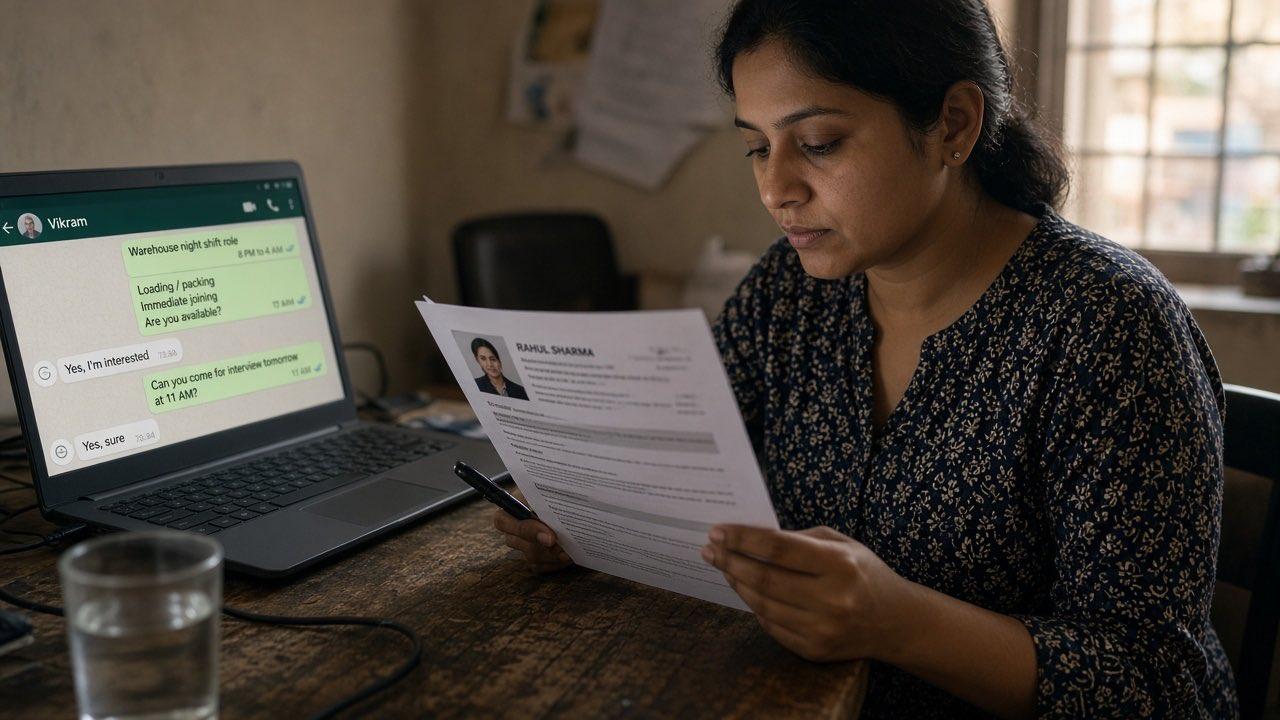
It takes the repeat work out of the first week of a hiring process. A candidate writes at nine at night and asks whether the role is on the night shift, how far the site is and when the interviews are. The bot answers from a role sheet a recruiter approved, asks the must-have questions one at a time, and offers interview slots from a live calendar. The recruiter opens a readable list in the morning instead of a phone full of unread messages.
Give the first version one role and four jobs. It states the shift, the place and the process from the approved sheet. It asks the must-haves for that role and writes each answer in the candidate's words. It books the slot. It stops when the question is about a pay band you have not written down, a visa, a medical condition, or anything the candidate is upset about.
That is a different product from a general AI chatbot. A shop bot can be wrong about opening hours and you fix the note. A hiring bot that invents a salary, or that stores a resume with no notice, creates a record you then have to explain. The DPDP Act is the reason the notice and the purpose are part of the build, not a policy page someone writes later. Confirm the notice wording with your adviser.
How does a recruitment chatbot work from the first message to the interview?
It follows the order a good recruiter would, one stage at a time, and each stage leaves a record the recruiter can read. The stages below are the same whether the channel is WhatsApp, a careers page or a QR code on a poster.
- Entry: the candidate taps the WhatsApp link in a job ad, scans a QR code at a walk-in drive, or opens the chat on the careers page. The bot greets in the candidate's language and names the role.
- Notice: a short message says what will be kept, why and for whom, before the first personal question.
- Role facts: shift, place, process and the pay band only if a recruiter has written it down. Anything else is a handover.
- Screen: the must-haves, one at a time. Choices use quick-reply buttons (can you work nights: yes or no). Open answers, such as where the person lives, stay in the candidate's own words.
- Documents: the bot asks only for what this role needs, then confirms which file it keeps.
- Shortlist: rules the recruiter set sort candidates into meets every must-have, needs a look, and does not meet a stated must-have. All three groups reach a person before anyone is told no.
- Interview: slots come from the live calendar. A confirmation carries the address, the name to ask for and what to bring.
- Reminder and reschedule: a reminder goes out before the day, with a button to move the slot, so a clash becomes a new booking instead of a silent no-show.
- Handoff: the recruiter gets one packet with the role, the answers, the file, what the bot said and what it declined to answer.
What are some recruitment chatbot examples for hiring in India?
The flow changes with the kind of hiring. Five common patterns, and what each changes in the bot and in the recruiter's check.
- Shift hiring for a warehouse, store or plant: the bot asks about night shifts, travel to the site and the earliest start date, then books a batch interview. The recruiter's job is the final check on documents at the gate.
- A staffing agency filling roles for several client companies: the notice names the fact that profiles may be shared with a client for the roles the candidate agrees to. The bot asks which client roles the person is open to, and the recruiter shares a profile only after that answer. Data sent to another company needs to be complete and accurate, which is why the candidate can correct an answer in the chat.
- A hospital or clinic hiring nurses and technicians: the bot records the registration number and the shift pattern the candidate can take. A recruiter confirms the registration with the issuing body. Interview slots avoid the shift changeover.
- A small company hiring office and technical roles: the bot sits on the careers page, asks for a portfolio link, the notice period and one question set by the hiring manager, then books a call. Senior roles skip the bot and go straight to a person.
- A campus or walk-in drive: candidates scan a QR code at the venue, give their course and stream, and receive a time and a token number. Nobody stands in a queue to find out they are in the wrong room.
How should the bot build a shortlist without deciding who is hired?
Use rules a recruiter can read, not a hidden score. A rule says the role needs night shifts and a candidate answered no. The recruiter sees which rule placed the person and can overrule it. A score that no one can explain makes a poor record if a candidate later asks why they were not called.
The Act sets a duty here. Where personal data is likely to be used to make a decision that affects the person, the organisation must keep it complete, accurate and consistent (section 8(3)). In practice, that means three habits. Ask again when an answer is unclear instead of guessing. Let the candidate change an answer before the packet is sent. Never fill a gap from a name, a photo or a guess about age, caste or marital status.
The same Act says consent covers only personal data necessary for the specified purpose (section 6(1)). A shortlist does not need a parent's name or a photograph. If the role does need an ID check, do it at the interview, in person, not in the first chat.
How should interview scheduling and reminders work on WhatsApp?
The bot books against the real calendar, with a buffer between slots, and each slot can be taken once. It confirms in the chat and again in a message the candidate can keep. A reschedule button frees the old slot at once, so the next candidate can take it.
Reminders need one piece of planning. When a candidate writes to your number, WhatsApp opens a 24-hour customer service window. Inside it you can send ordinary messages. When it closes, you can send only pre-approved template messages, and only to people who opted in. A candidate who booked three days ago has a closed window on the evening before the interview, so the reminder has to be a template. Build and approve that template, with its reschedule button, before the first live drive. Building the WhatsApp chatbot covers the window itself, and the Business app compared with the API explains why a hiring team needs the API.
For a drive with many candidates, add a plain fallback: a phone number a person answers on the day. A bot that books and then cannot help at the venue gate loses the candidate it just won.
What does the candidate see before a resume is stored?
A short notice, in the same chat, before the upload or the first personal question. Rule 3 of the DPDP Rules, 2025 says the notice must be understandable on its own, in clear and plain language, with an itemised description of the personal data and the specific purpose. It must also say how the candidate can withdraw consent, as easily as it was given, exercise their rights and complain to the Data Protection Board. For a hiring chat, the notice names what you keep (the answers, the file, the transcript), why (this role), who reads it (the recruiter for that role) and how to stop. Rule 1(4) brings Rules 3 and 5 to 16 into force eighteen months after the Gazette date, so build to them now.
A link to a long privacy policy does not replace that notice. The same pattern is what a business website owes under the DPDP Act on a careers form. Keeping the thread at all, for a hiring chat or any other, is the wider case in what the DPDP Act means for a chatbot that stores chats.
Language matters too. Section 5(3) of the Act gives the candidate the option to read the notice in English or any language in the Eighth Schedule to the Constitution, which includes Telugu and Hindi. A bot that already replies in Telugu, Hindi or other Indian languages should show the notice in the same language as the chat.
Ask only what the screen needs. For a warehouse shift that might be whether the person can work nights, how they will reach the site and when they can start. A photograph, a parent's name, or a number that is not required for this role waits. If the candidate sends extra documents, the bot confirms which file it will keep and which it will ignore.
How should candidate data be stored, protected and deleted?
Set a retention date on every record when it is created, and tie it to the role. The Act requires erasure when the person withdraws consent, or as soon as it is reasonable to assume the purpose is no longer served, unless a law requires you to keep the data (section 8(7)). A filled role ends the reason you collected the file, but Rule 8(3) of the DPDP Rules sets a minimum of one year from processing for the data and its logs before erasure for the purposes listed in its Seventh Schedule. Confirm the date, and any legal reason to keep a record longer, with your adviser.
Security is part of the build. Rule 6 of the DPDP Rules, 2025 lists the minimum safeguards: encryption, masking or tokens for the data, control over who can reach it, logs and monitoring of access, backups, a security clause in the contract with any processor, and keeping those logs for one year. In a hiring tool this means the resume store is not a shared folder, each recruiter sees only their roles, and an access log shows who opened which file.
A vendor that runs the chatbot for you is a processor. The Act asks for a valid contract with any processor (section 8(2)), and the employer stays responsible for the processing (section 8(1)). Sign the agreement before the first candidate writes. If a breach happens, Rule 7 sets what each affected candidate and the Board must be told, so name the person who handles it before launch.
Publish a way for candidates to ask a question or raise a complaint about their data. Rule 9 asks for a prominently published contact for questions about processing, and Rule 14 asks for a grievance route and a response within the period it sets. Put both on the careers page and in the bot's help message.
Who decides, the bot or the recruiter?
The bot records. The recruiter decides. A rule can order the queue. It should not send a rejection, promise a salary, or mark someone ineligible because a sentence was ambiguous. When the candidate asks for a person, or types that they want to stop, the chat ends the automated path and the transcript goes to the named recruiter.
A note that only says the candidate wants to talk throws away the screen: send the packet described in the handoff step.
When can you message the same person about a new role?
Only if the first conversation included that purpose and the candidate agreed, in a way you can show later. The Act puts the burden on the organisation to prove that notice was given and consent obtained (section 6(10)). Reusing a resume from a closed role for a new campaign, because it is already in the folder, is a new purpose. Treat it as one. Confirm the basis with your adviser before you switch that on.
The channel has its own rule. Outside the 24-hour window, WhatsApp allows a pre-approved template, not a free-typed note. A template that names a new role is still a message about personal data, so the consent question and the template question are both in the design.
How does Softivum build the first hiring chat?
We start with one role, one channel, and the notice cleared. The bot reads only the approved role sheet. The resume and the transcript land in the inbox or ATS you already use, with a retention date on the record. Accounts and the WhatsApp number stay in your name. Each week you see the chats, the shortlist and the booked slots in a short demo, and the rules change in writing.
AI chatbot development is the build. LeadFlow is what happens to each candidate after the chat, including the owner and the deadline so the application does not sit unread.
What the hiring chatbot does and what stays with a recruiter
| Aspect | Chatbot | Recruiter |
|---|---|---|
| Role facts you have written down | Answers from that sheet | Approves the sheet |
| Must-have questions | Asks and records the reply | Sets the questions |
| Shortlist order | Applies the written rules and shows which rule fired | Reviews every group and can overrule a rule |
| Interview slot | Books against the live calendar | Owns the calendar rules |
| Reminder and reschedule | Sends the approved template and frees the old slot | Handles the no-show and the exception |
| Pay, rejection, eligibility edge cases | Hands over with the transcript | Decides |
| Withdrawal or deletion request | Logs it, stops the chat and alerts the owner | Confirms and completes the erasure |
| A new role months later | Sends nothing unless a template and a prior agreement exist | Chooses who may be contacted |
How do you set up a recruitment chatbot?
Write the role sheet
A recruiter writes shift, place, process and the questions candidates always ask. The bot answers from this sheet and nothing else.
Fix the must-haves and the refusal list
List the must-have questions in order. List what the bot must hand over: pay bands you have not written down, visas, medical issues and complaints.
Write the notice with your adviser
Cover the data kept, the purpose, who reads it, how to withdraw and how to complain, in each language the bot speaks.
Connect the calendar and the templates
Link the interview calendar, then submit the reminder and reschedule templates for approval before the first live drive.
Route every packet to an owner
Each candidate packet goes to one named recruiter with a response time. LeadFlow tracks the follow-up.
Test, launch and set retention dates
Run test candidates through every branch, including a withdrawal request. Then open the role to real candidates with a retention date on each record.
Before the hiring chatbot talks to candidates
- The notice is in the chat, before the resume, in the candidate's language, and has been checked
- The role sheet states shift, place and process, and nothing else is answered
- Must-have questions are listed, and pay and rejection are on the refusal list
- Shortlist rules are written down, visible to the recruiter and open to override
- The candidate can correct an answer before the packet is sent
- The reminder and reschedule templates are approved before the first drive
- Each application has one recruiter and a response time
- Resume storage has access control, an access log and a retention date
- A person can be reached on the day of an interview or drive
- A later campaign is a separate agreement, not a reuse of the old file
Sources
Rules and guidance this answer relies on. Policies change, so check the current version before acting on it.