Websites and software from a team based in Kakinada
Softivum is based in Kakinada, Andhra Pradesh, and works remotely. We build websites, custom software and AI automation for businesses here and across India, and most of our longest-running local work is for a Kakinada preschool. If you're nearby, we can meet in person by arrangement, in Telugu or English, before and during the work.
Kakinada is where Softivum is based, and four documented projects were built for clients here. 58-1-14, Jagannaickpur, Kakinada, Andhra Pradesh 533002, India
Free 30 minutes · no obligation
What changes when your developer is in Kakinada?
Mostly, the conversations get easier. A school owner or shop owner can sit with us, open the site on their own phone and point at what feels wrong. That kind of review catches things a video call misses: a fee table that's hard to read in sunlight, or a form a grandparent can't finish.
We work in Telugu and English. Many local owners think through a project in Telugu and then have to translate it for an agency elsewhere; here that step disappears. The written scope, the code and the handover documents are still in English, so anyone you hire later can pick them up.
Being local doesn't change how the work is run. Scope is written down before we start, you see the real build every week, and at the end you get the source code, the data and the accounts in your name. Our answer on who owns a website after a developer builds it covers what that handover should include wherever your developer is.
What have we built for Kakinada clients?
Most of our Kakinada work is for Little Lumos Preschool, a Reggio Emilia-inspired preschool, and it started with the website. Parents choose a preschool slowly, often researching at night months before admissions, so the 116-page Little Lumos website does more than describe the school. It explains an approach most local parents haven't heard of, answers fee and transport questions, and has dedicated pages for the way parents search locally, such as play school and daycare in Kakinada.
The enquiry form came next. Admission forms tend to ask for everything the office will eventually need, and parents abandon them halfway. We cut it to ten questions, and parents now complete an enquiry in under 30 seconds. The admission form case study explains which questions survived and why.
Then the operations. The school's admissions, attendance, fees and parent messages were spread across registers, spreadsheets and WhatsApp groups. The School Hub portal brings them into one system, with separate views for administrators, teachers and parents. Fees are versioned, so changing next year's fee can never quietly rewrite an invoice a parent has already paid.
The most recent piece uses AI. Teachers were writing more than 70 monthly progress reports by hand, which took roughly three to four working days every month. Now a teacher speaks their observations, AI drafts the letter, an administrator reviews and approves it, and a branded PDF reaches both parents with delivery tracked per parent. Nothing reaches a parent until a person has read it. The progress report platform case study has the details.
What do schools and preschools here usually need?
Judging from the Little Lumos work, the order is fairly consistent. First, a website that answers the questions parents ask before they ever call: the approach, the day, the fees, transport, safety. Second, an enquiry route short enough that a parent finishes it on a phone. Third, once enquiries grow, a system that keeps admissions, fees and parent communication in one place instead of five.
Not every school needs all three at once. A single-branch preschool can run well on a good website and a short form for a long time. Our school management software pricing guide helps you judge when a portal starts to pay for itself, and the schools and preschools page lists what we build for education clients.
- Pages for the searches parents actually make, including locality and program pages
- An enquiry form of ten questions or fewer, tested on a phone
- Fee records that can't be rewritten after the fact
- Parent messages sent from a system of record, not a personal phone
What about weddings and family events?
One of our most technically involved projects was a wedding. Safalya and Praneeth married at V.L Convention Hall in Kakinada, with the reception in Khammam and relatives across India and overseas. Their digital wedding invitation replaced the card, RSVP, photo album, guestbook and live stream with one link. Guests could write blessings in ten Indian languages, and elders could write in Telugu rather than English.
It's a family event, not a business, but the lessons carry over to venues and event organisers here. Guests are spread out, many prefer to write in their own language, and photos disappear into WhatsApp groups unless something collects them. Our events and banquets page covers what we build for venues.
Do we only work with businesses in Kakinada?
No. Most of our clients are elsewhere in India, and we work with them remotely as standard: weekly demos, shared preview links and a written record of every decision. Hyderabad is the other city where we have documented work, described on our Hyderabad page. For what's specific to building for Indian customers anywhere, such as GST invoices, UPI payments, WhatsApp enquiries and Indian-language chatbots, see our India page.
What matters locally in Kakinada
Each point links to the official source it relies on. None of this is legal advice.
Children's data in school systems
School portals and enquiry forms hold personal data about parents and young children. The DPDP Rules notified in November 2025 require verifiable consent before processing a child's personal data, with limited exemptions for essential purposes that include education. Which exemption covers which school process is a question for your legal adviser, but consent capture and access controls are far easier to build in from the start than to retrofit. The Rules phase obligations in over 18 months.
Source [2](opens in a new tab)You answer for your software vendors
Under the DPDP Act, the business that decides why and how personal data is used stays responsible for it, including when a vendor processes it on its behalf. For a school, that means the portal provider, the messaging service and the email service all need written terms and sensible security, not just the school office.
Source [1](opens in a new tab)
How a project runs with us
Meeting in person
If you're in or near Kakinada, we can meet at your premises by arrangement for the first conversation and for reviews. Everything else works over video call and chat.
Language
Conversations in Telugu or English; written scope, code and documentation in English so the work stays portable.
Ownership
Source code, data, domain and hosting accounts are in your name at handover, the same as for every client.
Work we have delivered in Kakinada
4 documented projects.
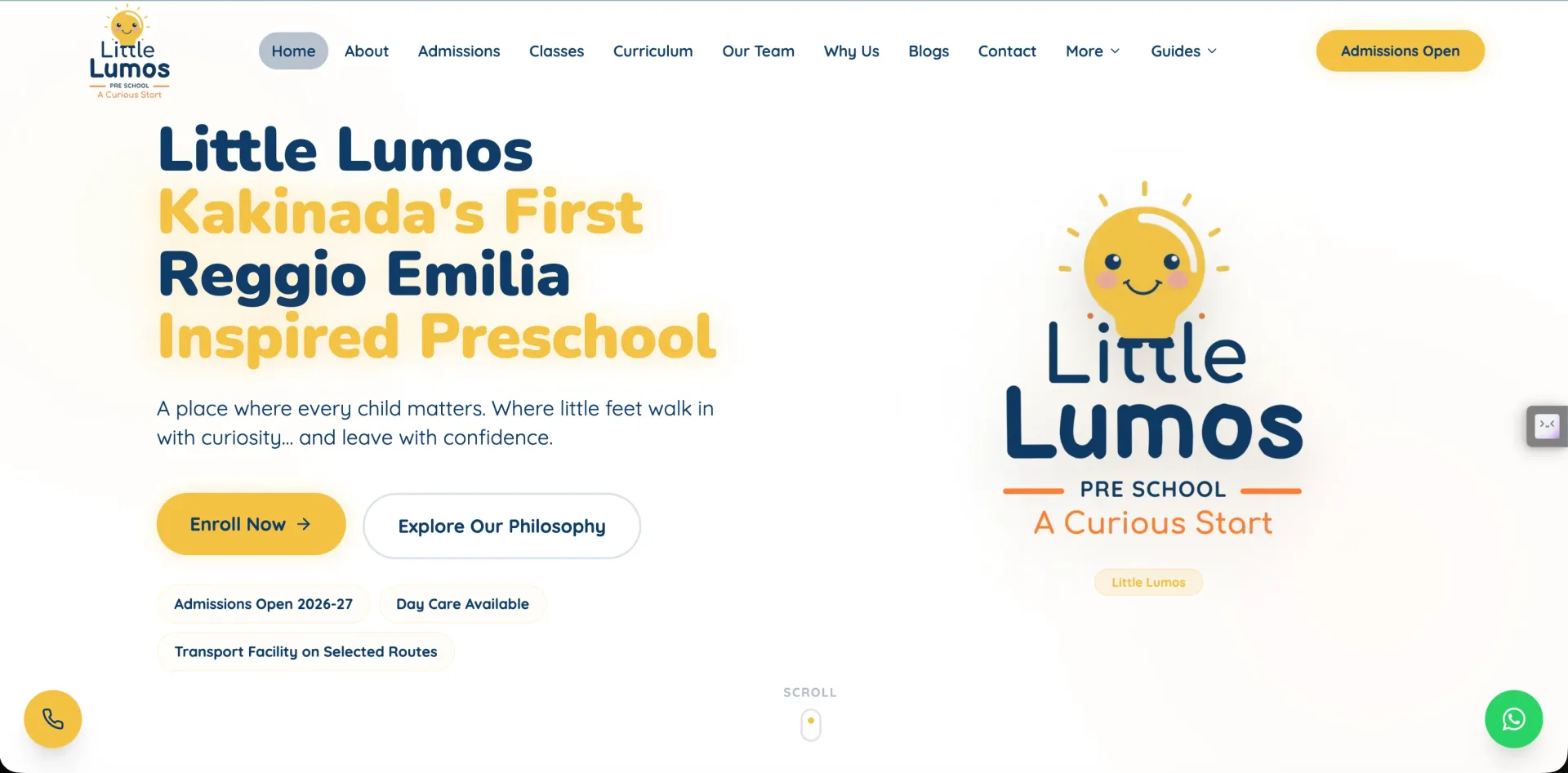
Little Lumos Schools
Kakinada's first Reggio Emilia-inspired preschool — the digital standout in a 60+ preschool market
Read the case study →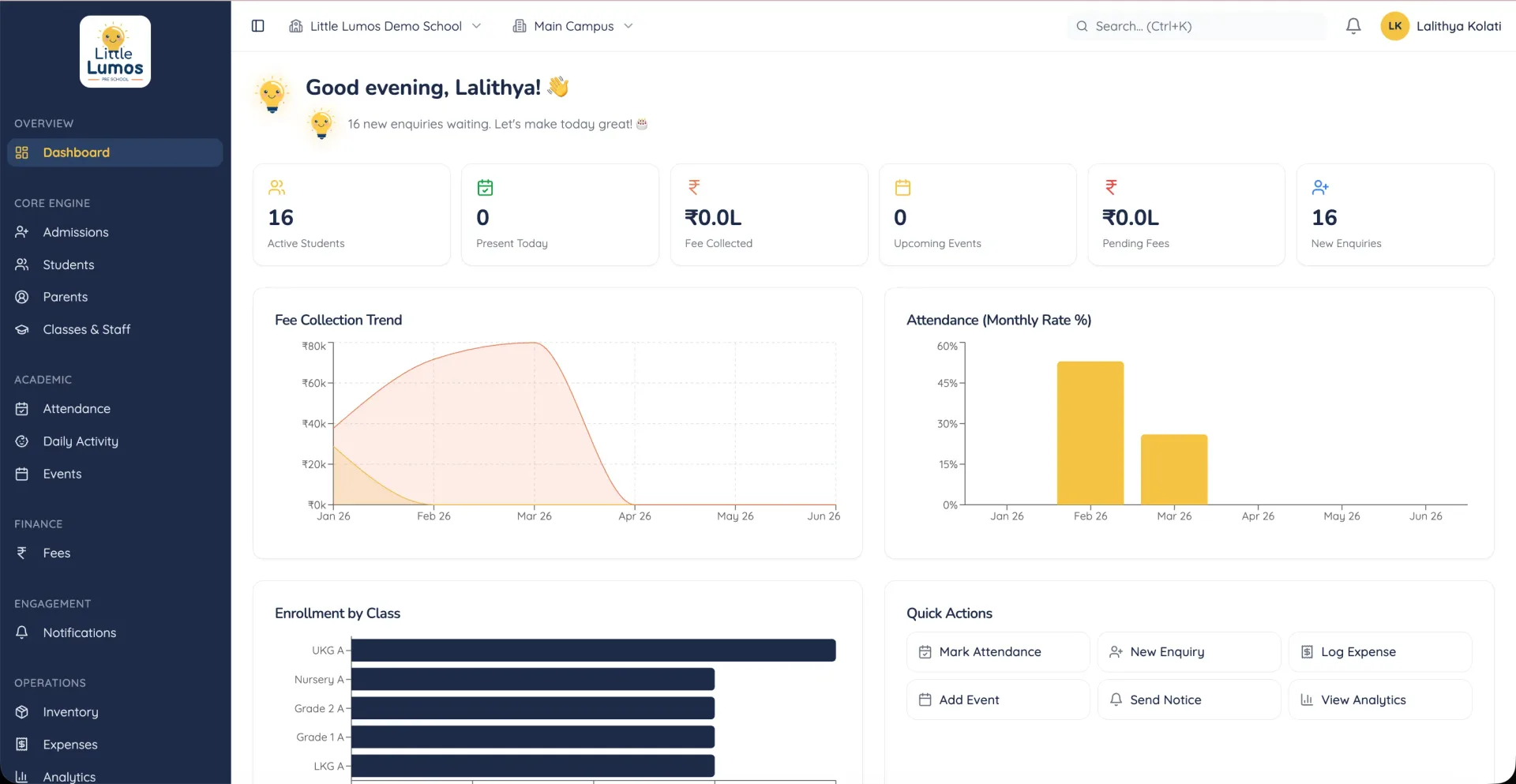
Little Lumos School Management Portal
Custom-built school management SaaS that automates end-to-end school operations
Read the case study →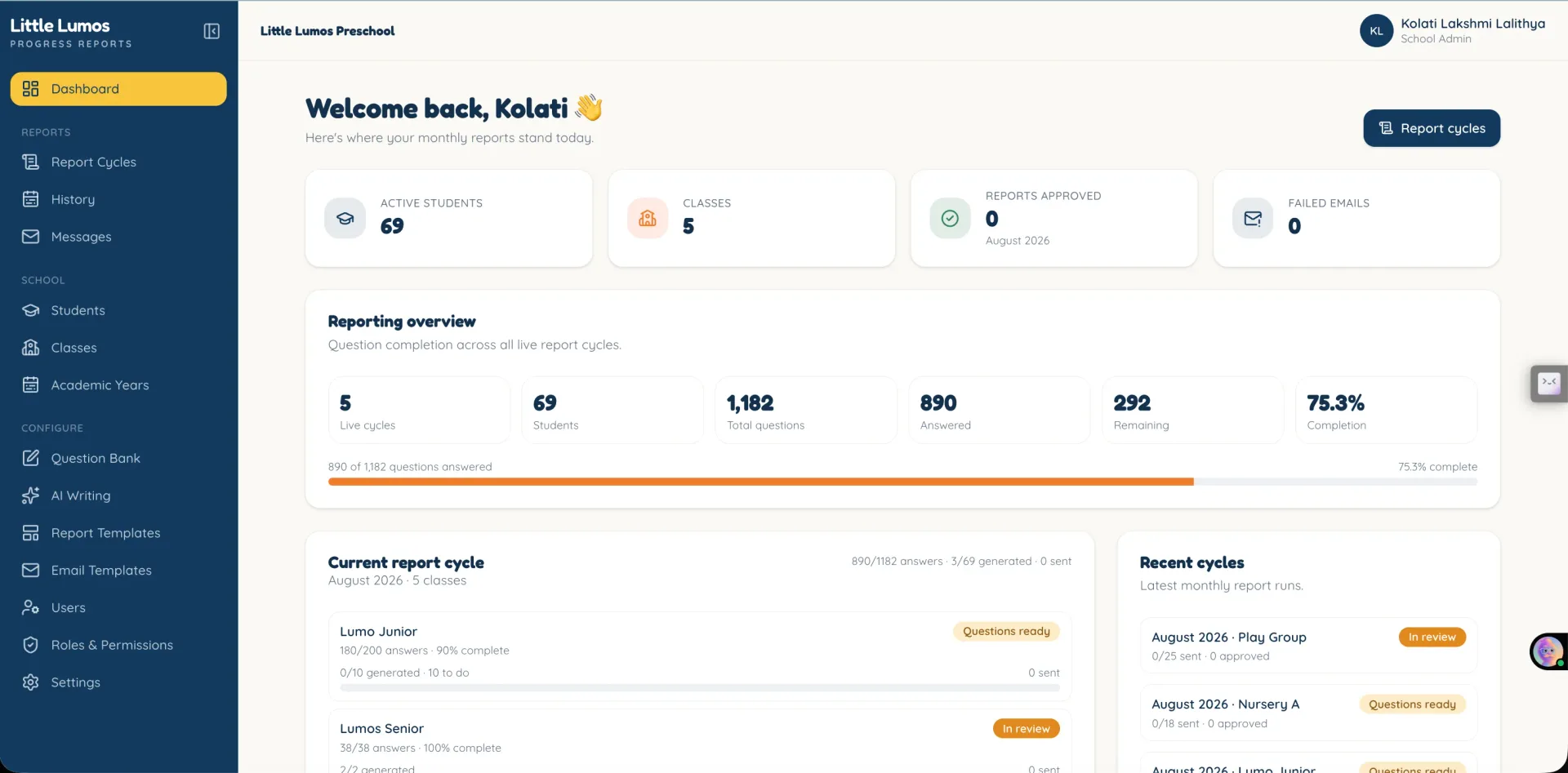
Little Lumos — AI Monthly Progress Reports
A preschool was hand-writing 70+ monthly progress reports, costing 3–4 working days every month. Softivum built the full workflow: teachers speak, AI drafts, admins approve, and branded letters reach both parents with per-recipient delivery tracking.
Read the case study →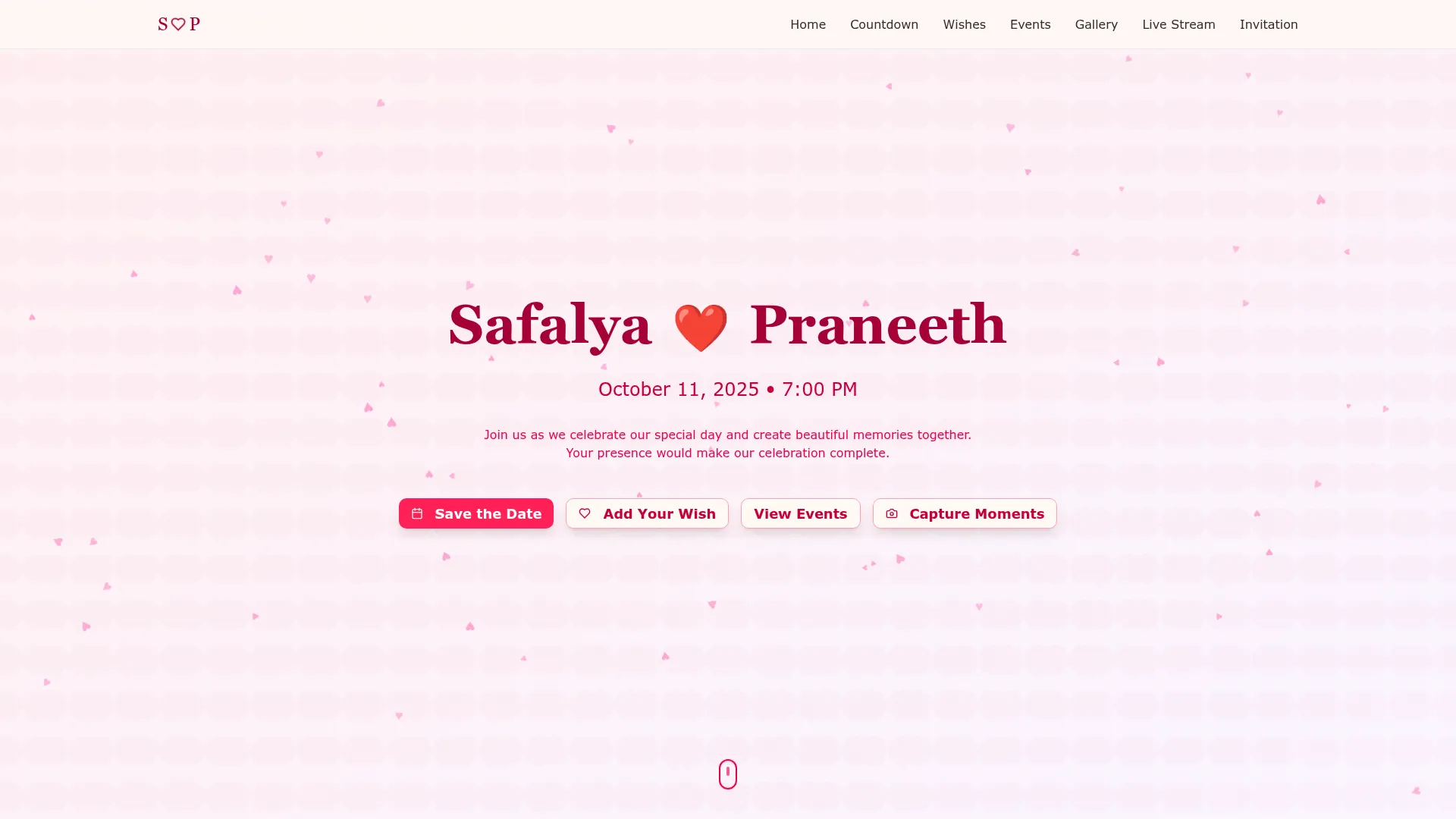
Safalya & Praneeth Wedding Invitation
Custom-built AI-powered digital wedding invitation with a multilingual wishbook, live streaming and interactive guest experiences
Read the case study →
Kakinada: common questions
Sources
- MeitY: The Digital Personal Data Protection Act, 2023
- Press Information Bureau (India): Government notifies DPDP Rules
Last reviewed 2026-11-01.
Working in Kakinada?
Book a free 30-minute call, get a two-minute audit of your current site, or send a quick question on WhatsApp.
No call required