Building websites and software for Indian businesses
Softivum is an Indian company, based in Kakinada, and every client we've documented so far is in India. Building for Indian customers means designing for things a template from elsewhere ignores: enquiries that arrive on WhatsApp, payments by UPI, GST invoices, new data protection rules, and customers who would rather write in Telugu or Hindi than English.
Softivum is based in Kakinada, Andhra Pradesh, and has documented work for clients in Kakinada, Hyderabad and across Karnataka.
Free 30 minutes · no obligation
What is different about building for Indian customers?
Four habits shape almost every project here. Customers reach out on WhatsApp before they fill in a form, so the enquiry path has to work in a chat, not only on a contact page. They pay by UPI far more than by card, which changes how a checkout is designed and which payment provider fits. Many of them browse on mid-range Android phones over mobile data, so page weight matters more than design trends. And a sizeable share would rather read and write in their own language.
None of that needs exotic technology. It needs a team that designs for it from the first wireframe instead of bolting it on. Our pages on taking UPI and card payments on a website and on chatbots that reply in Telugu, Hindi and other Indian languages go into the detail.
Which Indian rules affect a website or business software?
Three sets of rules come up most often. The Digital Personal Data Protection Act now governs how your forms, CRM and analytics handle personal data, with obligations phasing in over 18 months from November 2025; our DPDP Act guide for business websites translates it into website terms. GST decides what your billing software must print, and above the e-invoicing threshold it has to talk to the government's Invoice Registration Portal, as our GST e-invoicing answer explains. RBI rules decide who can collect payments for you and how recurring payments are authorised.
WhatsApp isn't a law, but Meta's rules for the business platform behave like one: what you can send, when, and at what price. Our WhatsApp Business API pricing guide for India tracks the current per-message model. The specifics are summarised below, each with its official source.
Where in India have we worked?
Our office is in Kakinada, and the most documented work is there: a preschool's website, admission form, school portal and AI progress reports, plus a wedding platform. The Kakinada page has the detail. In Hyderabad we've built multi-branch preschool pages and a banquet venue site, described on the Hyderabad page.
Beyond those two cities, we built the website for Relicomp Elevators, a manufacturer serving homes, commercial buildings and industry across Karnataka and Tamil Nadu, with city-level pages for the towns it actually services. The Relicomp case study explains how the site handles four very different kinds of elevator buyer. The wedding platform's reception was in Khammam, Telangana, with guests joining from across India and abroad.
We don't publish a page for every city we could name. A place gets its own page here when there's real work or an office behind it, not a template with the city swapped in.
How do Indian businesses usually start with us?
Most begin with a website or a set of landing pages, because that's where enquiries start. Cost and timing are the first questions, and our guide to website costs in India explains what drives the price without pretending there's one number. Once enquiries grow, the next step is usually the work behind them: following up on WhatsApp, a CRM that fits the business, or workflow automation for the admin that eats the team's week.
What is different about building for India
Each point links to the official source it relies on. None of this is legal advice.
GST e-invoicing above the turnover threshold
If your aggregate turnover across all GSTINs under one PAN has crossed five crore rupees in any financial year since 2017-18, your B2B invoices, credit and debit notes must be reported to an Invoice Registration Portal, and the returned IRN and QR code printed on the invoice. Billing software has to support that flow, not just print a GST-formatted bill.
Source [2](opens in a new tab)DPDP consent notices and breach duties
The DPDP Rules require a standalone, plain consent notice explaining why personal data is collected, prompt notice to affected people after a breach, and verifiable consent before processing children's data, with limited exemptions. Obligations phase in over 18 months from November 2025, so forms and CRMs built now should follow them.
Source [1](opens in a new tab)Payments run through an RBI-authorised aggregator
Online merchants collect UPI, card and netbanking payments through a payment aggregator regulated by the Reserve Bank of India, which carries out merchant checks and settles funds to your bank account. Your own site should never store card credentials; the aggregator's hosted checkout handles them.
Source [3](opens in a new tab)Recurring payments need an e-mandate
Subscriptions, fees collected monthly and other recurring debits must follow RBI's e-mandate framework, which sets how the customer authorises the mandate and is notified before debits. Plan for this before building a subscription or instalment feature.
Source [4](opens in a new tab)WhatsApp templates are per language and pre-approved
Outside an open customer service window, a business can only send approved WhatsApp template messages, and each language version counts as its own template. A business replying in Telugu, Hindi and English needs templates written and approved in each.
Source [5](opens in a new tab)
How a project runs with us
Working hours
We work Indian business hours, so calls, reviews and launches happen in your day, not overnight.
Languages
Conversations in English, Telugu or Hindi; written scope and code in English so the work stays portable.
Meeting in person
Clients near Kakinada can meet at our office; elsewhere we work remotely and visit by arrangement when it genuinely helps.
Ownership
Source code, data, domain and hosting accounts are handed over in your name, with no per-seat licence.
Work we have delivered for clients in India
4 documented projects.
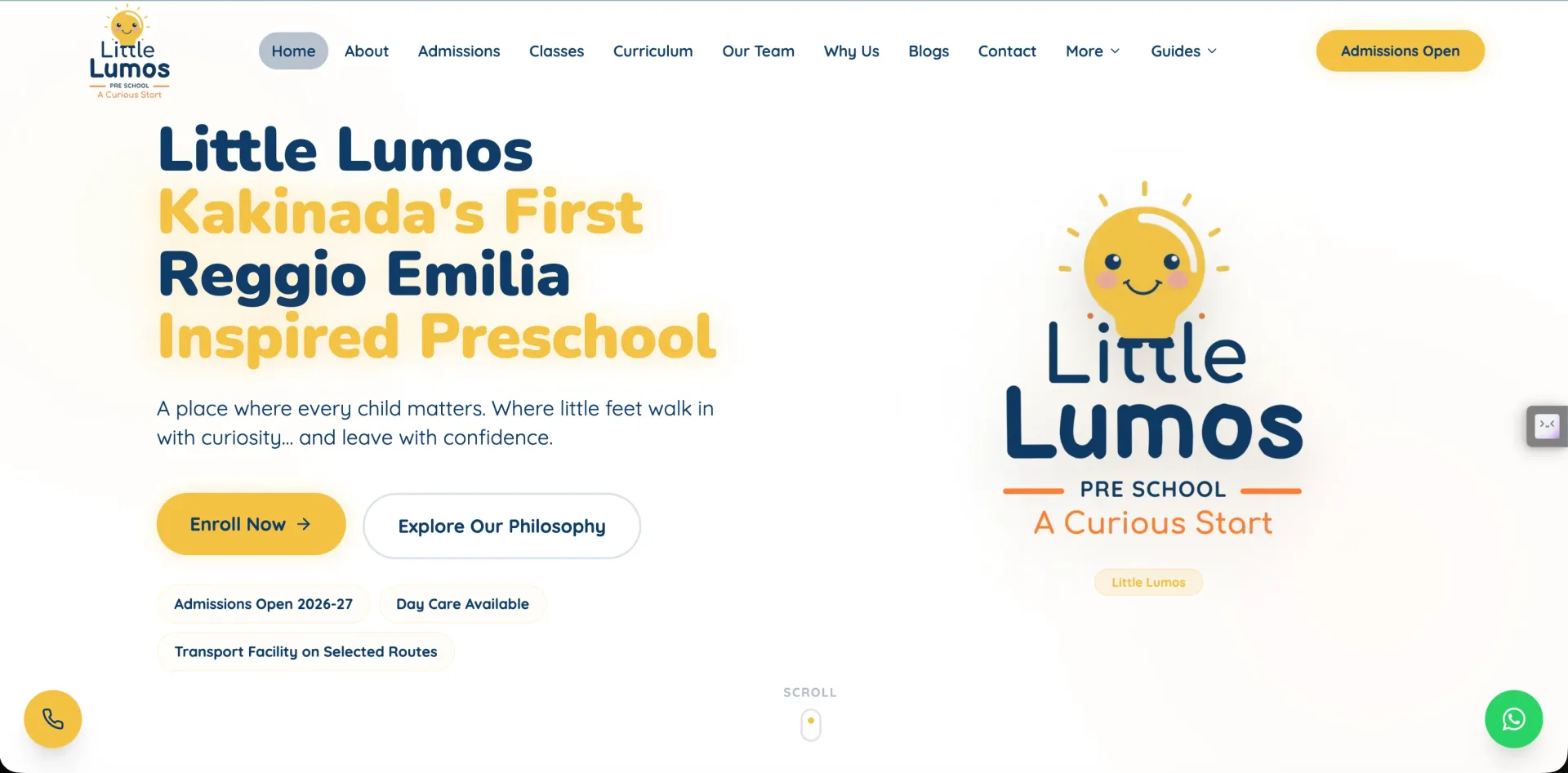
Little Lumos Schools
Kakinada's first Reggio Emilia-inspired preschool — the digital standout in a 60+ preschool market
Read the case study →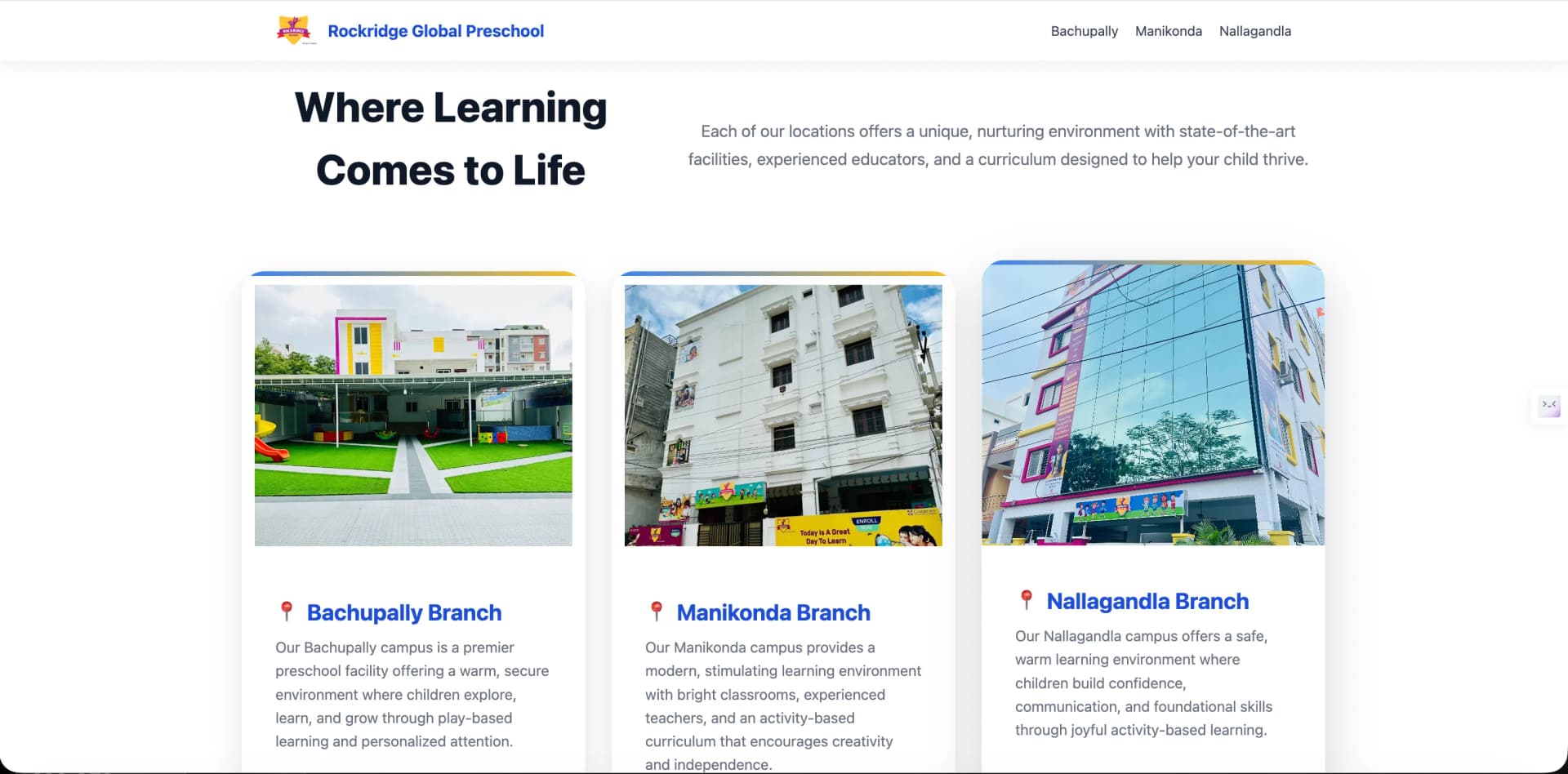
Rockridge Global Preschool — Multi-Branch Sites
Three locality-optimized branch pages on one domain, Bachupally, Manikonda and Nallagandla, sharing a single enquiry route
Read the case study →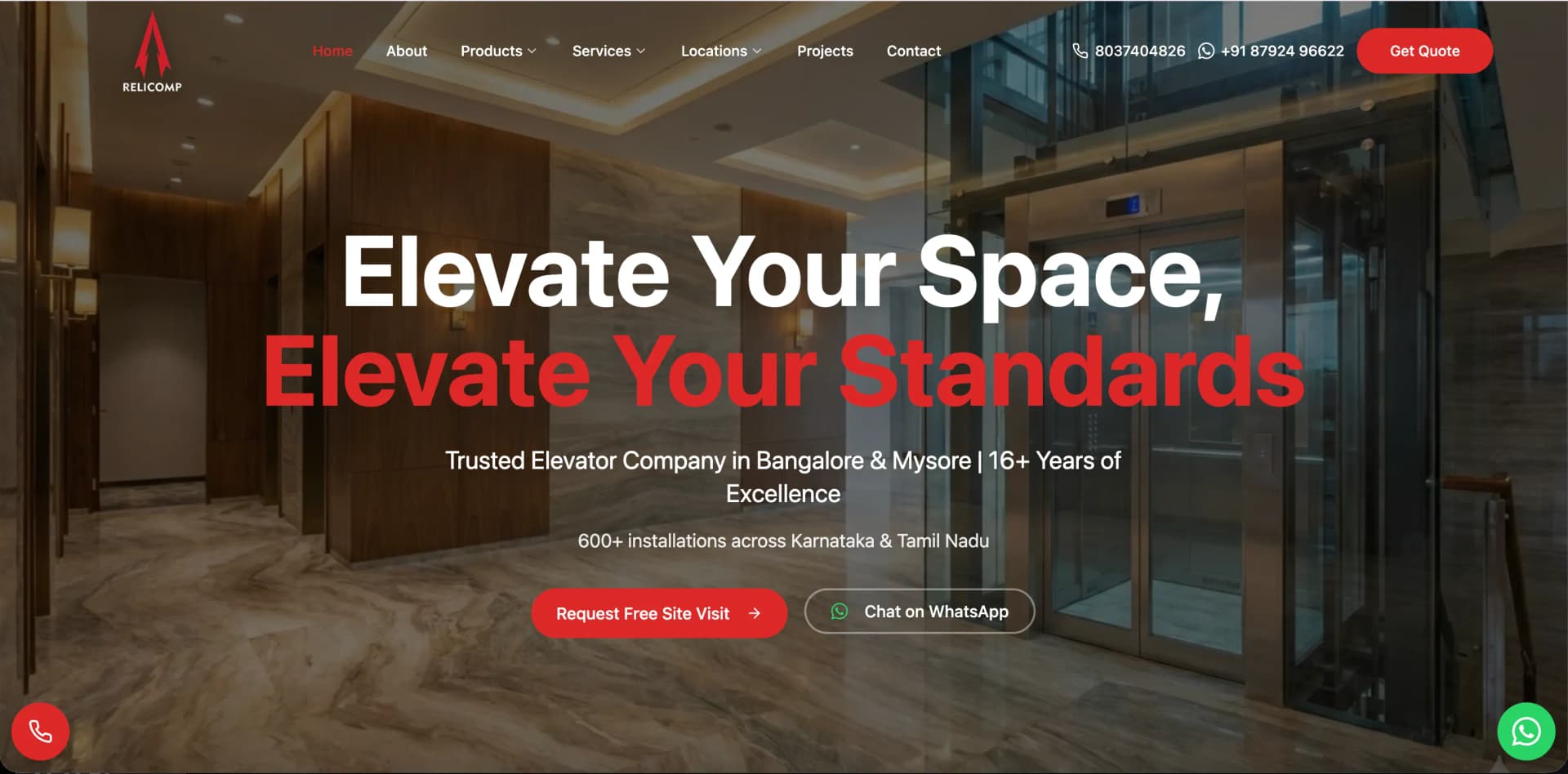
Relicomp Elevators
South India's trusted elevator manufacturer — 16+ years, 600+ installations across 8+ cities
Read the case study →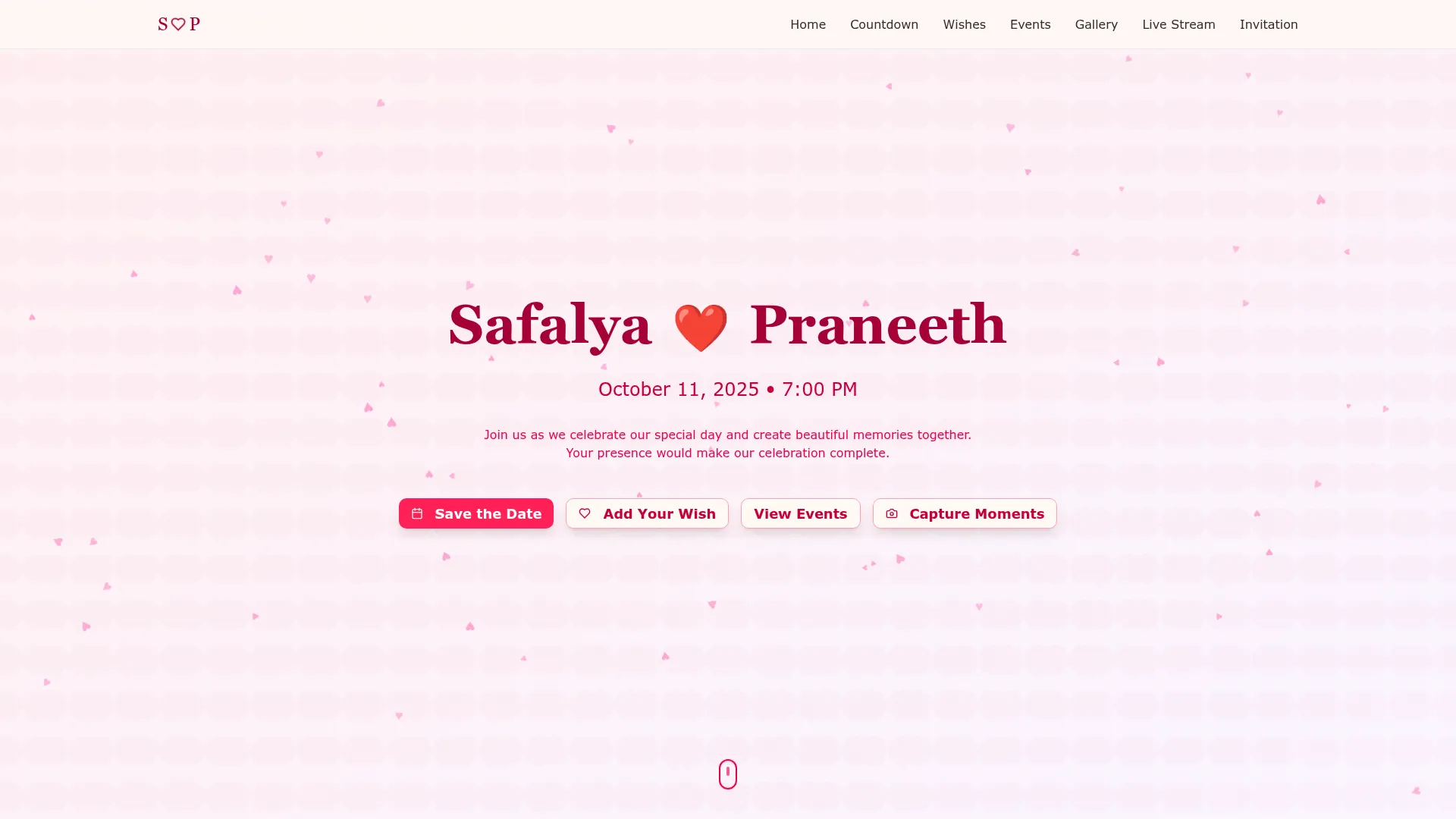
Safalya & Praneeth Wedding Invitation
Custom-built AI-powered digital wedding invitation with a multilingual wishbook, live streaming and interactive guest experiences
Read the case study →
Useful next reads
India: common questions
Sources
- Press Information Bureau (India): Government notifies DPDP Rules
- IRIS IRP (GSTN-authorised IRP): E-invoice mandate, covered documents and exemptions
- Reserve Bank of India: Master Direction on Regulation of Payment Aggregators (15 September 2025)
- Reserve Bank of India: Digital Payments – E-mandate Framework, 2026
- Meta for Developers: WhatsApp message templates
Last reviewed 2026-11-01.
Building something for India?
Book a free 30-minute call, get a two-minute audit of your current site, or send a quick question on WhatsApp.
No call required